
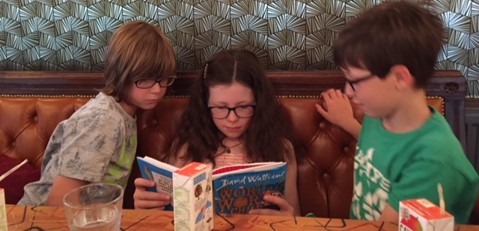
Making it Happen: Creating Life-long Readers
For as long as I can remember I have always loved books. Nothing, except perhaps shoes, gives me more pleasure. I don’t recall learning to read, the arduous act of decoding the words on the page, my earliest memory of reading at school is being curled up in the reception teacher’s chair and sharing the wonders of Noah’s Ark with the rest of the reception class. I was obviously destined to be a teacher! One thing I do know about those early experiences; both at school and home, are that they fostered a love of reading – a love that has made me the reader that I am today and began a life-long passion. I thrived on the advice, support and encouragement from the knowledgeable adults around me. Imagine my pleasure when I discovered the library, all those books and for free.
And yet, I am acutely aware that this is not the same for all children. Stark research from the National Literacy Trust, 2017, revealed that in the United Kingdom three-quarters of a million children do not own a book. A phenomenal number given the number of years that World Book Day have been providing a book token and Booktrust have been gifting books at key points in young children’s lives! And, why should that worry me? Well, I believe that every child irrespective of starting points should and can learn to read. Reading has the potential to change lives, to make a difference and indeed remove some of the barriers that growing up in poverty brings.
Research tells us that children from reading homes read. So, I believe that if we can remove the barriers that some families have towards reading and create a new enthusiasm for books in many homes, then this will make a difference to attainment and improve outcomes in reading for children.
Growing up, I had a happy childhood, there wasn’t very much money and we certainly didn’t get books bought us regularly. However, my parents valued the importance of reading aloud; we never went to bed without a bedtime story and as I got older and became a fluent reader I took over that responsibility. And, I can credit my mum, for introducing me to the wonders of a library. She still goes regularly! This is what every child has a right to experience.
So, what can schools do to shift the balance between parents seeing reading as solely about reading through the reading scheme books to the enthusiasm and recognition of reading for pleasure?
Schools need to review and evaluate the effectiveness of parental engagement in supporting reading.
Consider
Do you know who doesn’t own a book?
Do you know who has never had a story read to them at home?
Do you know who hasn’t visited a library?
Do you know who has never visited a bookshop and experienced browsing?
Are these the same children who are struggling with reading?
Does the above identify a target group of children? Are any of these PP?
If so, why not think outside the box and develop a project with a target group of parents that focuses on enthusiasm and developing an awareness of the importance of reading for pleasure. And then, I think you will begin to see an engagement with home reading!