
EYFS Resource
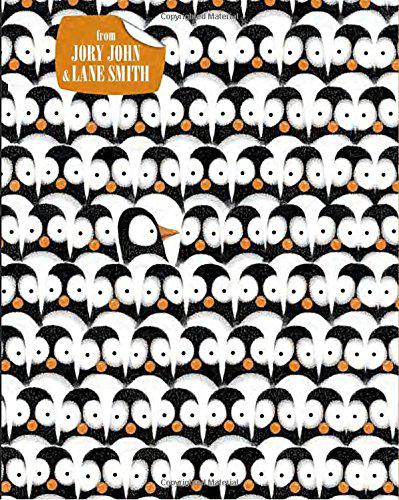
Penguin Problems by Jory John, illustrated by Lane Smith
About the author
Jory John is a writer, journalist, and editor. He has co-written a number of books including the bestselling All my friends are Dead and All My Friends are Still Dead. He has written a number of picture books including I Will Chomp You! And Quit Calling Me a Monster! His latest work is the picture book Penguin Problems.
About the book
A delightful book, perfect for sharing with children both young and old. Who would have thought that a Penguin could have so many problems. ‘It’s too early!’ and his ‘beak is too cold!’ Everything seems to annoy the Penguin. That is until he is stopped short with his moaning by a passing walrus who offers him a long-winded sermon beseeching him to appreciate the world in which he lives. However, it seems that this is a momentary pause in his angst because to the Penguin no one understands the challenges that he has to face. Then he notices the mountains, ocean, and sky and realises he is, in fact, a very lucky penguin. This book gives a clear message that sometimes we spend so much time moaning about what we haven’t got that we are unable to appreciate what we have. Lane Smith’s mottled, minimalist illustrations provide a perfect backdrop to the story
Suggested ideas for using this book
This is a perfect book for a whole class shared read which will encourage much discussion and allow many opportunities for imaginative play. A great book which will support the development of phonics skills and knowledge. Penguin Problems will support Letters and Sounds – the simple text covers a number of tricky words from phase 2, 3, and 4 and provides many opportunities for children to blend to read words typical with phase 2 and 3. This book would also be useful to demonstrate how to blend to read phase 4 words as there are a number of examples in the text.
Before reading
Ask the children ‘Have you ever seen a penguin?’
Let the children talk about their experiences.
Watch clips on YouTube of March of the Penguins
Listen to music March of the Penguins (soundtrack that accompanies the film)
Move like penguins
Look at a map and a globe and show the children where penguins are found in the world. Introduce vocabulary Southern hemisphere, the South Pole, and the Antarctic. Discuss the weather and compare to where the children live.
Set up the tuff tray to resemble Antarctic landscape including indigenous animals. Have you a selection of the different penguin breeds? Allow the children free exploration and imaginative play. Support the play by modelling and recasting appropriate vocabulary, e.g., wilderness, landscape, Emperor Penguin, Gentoo Penguin, Adelie Penguin, blizzard, glacier, colony, breathtaking
During reading
Book discussion – Do not use all the questions but select the most appropriate to provide opportunities for quality discussion. The questions are intended to encourage the children to think deeply about the text. At all stages invite all the children to make contributions – ones which can be added to. Avoid asking the children too many closed questions as this stops children from thinking.
Activating Prior Knowledge | This book reminds me of a time I … This book reminds me of when I read … This book makes me think about … |
Prediction | Without sharing the title.Look at the front cover What do you think this book is going to be about? What do you think is going to happen to the penguins. Read the back cover – do the children want to change or add to their initial ideas? Look at the inside front cover. When you saw the front cover what did you think this book was going to be? What made you think that? Now you have read the inside is it what you expected? What do you think this book is going to be about? Why do you think that? Tell me more. I think think this book is going to be about … Because …. Support children who may be finding it difficult to predict with a choice of either /or Will this book be about sharks or the South Pole and its inhabitants? |
Visualisation | Share the first picture with the penguin lying in the snow. Use white material to recreate a snowy landscape and ask the children to lie on their backs like a penguin in the snow. What are they thinking? (Thought tracking) Read the Walrus’s speech to the children without sharing the illustration and ask the children to picture the landscape in their mind, then draw/paint the landscape that the walrus is describing. Read the text without showing the illustrations. When you were reading this book did you ‘see’ the landscape in your imagination? Then look at the illustration – Was your picture the same as Lane Smith’s illustration? |
Summarising | What will you tell your friends/ another class about this book? |
Questioning | Using Aidan Chambers ‘Tell Me’ Booktalk What do you like about this book? What do you dislike? What do you find interesting? What do you find unusual about this book? Is there anything in this book that surprises you? How do you know? What makes you think that? What question would you like to ask the author? What is your favourite part of the book? Which is your favourite picture? Why? Is there anything you don’t like about the book? Has anyone noticed anything they want to tell us? What does this page make you think about? Were you surprised by something that someone else said? Record the children’s thoughts, ideas, and comments. Respond to their ideas with your own comments and invite other children’s comments which will enable the children to think deeper about the text. |
Vocabulary | Tell me – which is your favourite word/s or phrases. Do you find any of the words unusual? Do you find any of the words interesting? When reading this book were there other things to do with words/ language you didn’t like? |
Structure / Analysis | Were there any patterns or connections you noticed? Where did the story happen? What makes you think this? |
Interpretive Strategies | Tell me what does this book make you think about? (THEME) Tell me what you think the author is trying to say to you? How many different stories can you find in this story? Whose story is this? Who is this story for? Who is telling this story? If Jory John asked you what could be improved (make this book better) with this book what would you say? |